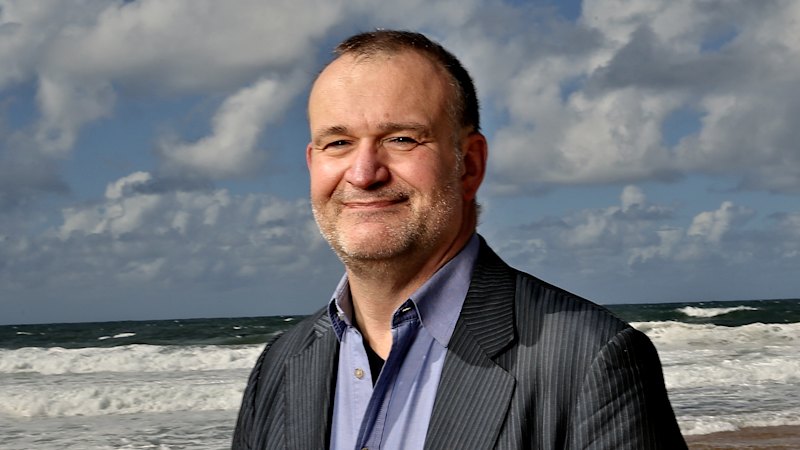
Francis Packer's Tragic End: From Prince to Private Life
The recent news of Francis Packer's passing at the age of 64 has cast a reflective shadow over one of Australia's most powerful and scrutinized dynasties. Once deemed the "heir apparent" to the colossal Packer fortune, Francis's life was a poignant narrative of privilege, personal struggle, and a deliberate retreat from the glaring spotlight that defined his family's legacy. Found dead at his Sydney home on Sunday, his death, confirmed by NSW Police on Wednesday, is suspected to be from a "medical episode," believed by his mother, Angela Raymond, to be a heart attack. The quiet conclusion to a life lived largely on its own terms underscores a journey far removed from the high-stakes world of media and business often associated with the Packer name. Indeed, the report that Packer dead from natural causes marks the end of a unique chapter in the family's saga.
Francis Packer was no ordinary scion. He was an artist, a budding author, and a self-described "black sheep" – a moniker that aptly captured his divergence from the family's expected trajectory. His body was discovered in a modest two-bedroom Cammeray apartment, a stark contrast to the opulent estates typically linked to the Packer empire. This unpretentious setting, owned by his elderly mother, symbolized a life consciously chosen, or perhaps inadvertently steered, away from the immense pressures of his birthright.
A Royal Lineage Derailed: The Burden of the Packer Name
Born into one of Australia's most influential families, Francis Packer was the only child of Clyde Packer and the oldest of Sir Frank Packer’s three grandchildren. He was, by his own admission in a 2014 interview with the Herald, "the little Packer prince," clearly designated for succession. The weight of this expectation was immense and instilled from a tender age. "There is a great pressure that goes along with having the Packer surname in this country. A pressure I was made aware of from a very young age," he revealed. "I was told that people would be watching me, to be wary of people’s motives..." This early immersion into the public scrutiny that accompanied the Packer name undoubtedly shaped his later choices and his deep-seated ambivalence towards media engagement.
However, the grand plans Sir Frank held for his grandson were abruptly altered by a profound family rift. The infamous falling out between Clyde Packer and his father, Sir Frank, climaxed in 1972 when Clyde dramatically severed ties with the family media business. This explosive disagreement stemmed from Sir Frank overriding Clyde's decision to allow a television interview with then-union leader Bob Hawke. The consequence was Clyde's departure to the United States, where he lived in exile until his death in California in 2001. This pivotal moment effectively rerouted the family's "chalice" of power and fortune to Francis's cousins, Kerry and later James Packer, rendering Francis an "unknown quantity" to the broader Australian public. This familial upheaval irrevocably changed the course of Francis's life, freeing him, in a way, from the gilded cage of expectation but also setting him adrift from the core of the family enterprise.
The Road Less Travelled: Navigating Personal Struggles and Estrangement
Francis Packer's life, though initially positioned for grandeur, was far from easy. It was a journey marked by significant personal challenges, including years of depression and addiction. Further compounding his struggles was the profound estrangement from his father, Clyde, largely over Francis's sexuality. This parental disapproval undoubtedly left deep scars, adding another layer of complexity to an already tumultuous upbringing.
For 35 years, Francis lived in America, a significant portion of his adult life spent away from his birthplace and the shadow of the Packer empire. During this time, he endured another profound personal tragedy: the loss of his partner in the World Trade Centre attacks in 2001. This devastating event left him with a grief that he carried for years, deeply impacting his emotional landscape. His return to Sydney in 2014 was prompted by a desire to find solace and be closer to his elderly mother. This move marked a conscious turning point, signaling a desire to rebuild and reconnect on his own terms.
Many found Francis's choices intriguing, especially given his background. His life of relative modesty, residing in his mother's apartment or tending his garden, presented a stark contrast to the billionaire lifestyles of his cousins. The news of Packer dead at his mother's home, rather than a sprawling estate, quietly underlined this personal choice. It speaks volumes about an individual who, despite being born into immense wealth, prioritized a different kind of richness in his later years. For more on his unique path, consider reading Francis Packer: The 'Black Sheep' Heir Apparent Dies at 64.
Finding Solace: Art, Nature, and Rekindled Connections
Upon his return to Australia, Francis Packer embarked on a new chapter, embracing life as an artist and budding author. He found profound solace in creative pursuits and the simple pleasures of life. He split his time between his cherished garden at Thirroul on the South Coast, a place of peace and inspiration, and the Sydney apartment where he eventually passed away. These spaces offered a sanctuary from the public gaze, allowing him to cultivate his passions away from the intense media scrutiny his family so often attracted.
Crucially, his return allowed him to reconnect with his mother, Angela Raymond, and rekindle old friendships. Childhood friend and gallery owner Tim Olsen described Francis as "a sensitive soul" who he believed was "often misunderstood" within the wider Packer family. Olsen painted a picture of a "gentle, kind man who struggled in life, but was incredibly bright." While friends affectionately joked that he was the "poorest Packer," Olsen affirmed his intellectual depth: "he was too humble to admit it, but he was absolutely the most scholarly of them all. He loved history, loved art, and was incredibly well-read." These insights reveal a man whose true wealth lay not in finance, but in intellect, empathy, and artistic sensibility.
In his later years, Francis also re-established a "friendly" relationship with his cousin Gretel Packer. However, he remained largely distant from billionaire James Packer, whose life continued to embody the very public, high-pressure world Francis had deliberately stepped away from. The news of Packer dead undoubtedly resonated through the entire family, including James, who is now mourning the loss of Francis, his artistic cousin who forged his own path.
The Legacy of a "Sensitive Soul": A Reflection on a Unique Life
Francis Packer's life serves as a compelling case study on the complexities of inherited legacy and the pursuit of personal authenticity. Despite being born into a name synonymous with power and wealth, he carved out an existence that prioritized introspection, creativity, and quieter joys. His journey highlights the often-unseen pressures that accompany immense privilege, demonstrating that true fulfillment can often be found outside the expected pathways.
His story encourages us to look beyond superficial definitions of success and to appreciate the courage it takes to forge an individual identity in the face of overwhelming familial and societal expectations. Francis's intellectual curiosity, artistic endeavors, and genuine humility speak volumes about his character. He was a man who, despite a rocky start and profound personal losses, found a way to nurture his spirit and connect with the world on his own terms. His life, in its quiet dignity and chosen simplicity, offers a valuable counter-narrative to the often-glamorous, yet frequently tumultuous, saga of the Packer dynasty.
The passing of Francis Packer, once the "little prince" whose path veered dramatically, closes a chapter on a life lived with a quiet strength and a deep commitment to his own truth. He may have been the "black sheep" to some, but to those who knew him, he was a sensitive, intelligent, and kind individual who, despite immense pressures and personal struggles, found solace and forged a meaningful existence on his own terms. His unique journey from heir apparent to private artist leaves behind a profound reflection on what truly constitutes a rich and fulfilled life.